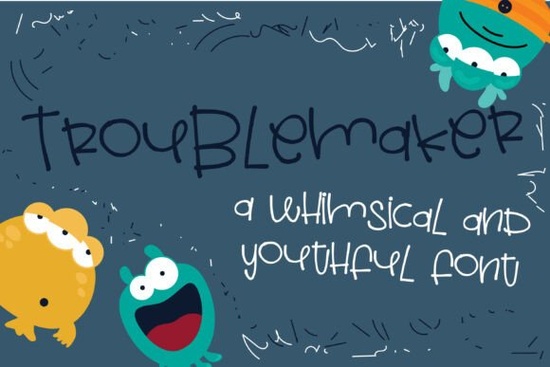
Finding the right typeface for playful projects can be tricky. You want something that feels personal and hand-drawn but still reads clearly on a screen or print material. The Troublemaker Family Font offers a specific kind of energy that fits well here. It captures that loose, sketched look without feeling messy. This typeface is designed to bring a sense of chaotic fun to your work, making it ideal for creators who want to move away from rigid, standard typography.
When you look closely at the letterforms, you will notice the thin monoline strokes. These lines maintain a consistent weight, which helps keep the design clean even when the baseline jumps around. The mix of uppercase and lowercase structures adds to the organic feel. It looks like something drawn quickly in a notebook, yet it holds enough structure to be used in professional settings. This balance is hard to find in many display fonts.
What makes this typeface stand out for creative projects?
The core appeal lies in its pencil-sketched energy. Many handwritten fonts try too hard to look perfect, which removes the human touch. This font embraces irregularities. The erratic tracking baselines mean that not every letter sits on the same line. This creates a sense of movement and life. For designers working on branding for youth-oriented products, this visual noise is actually a benefit. It signals approachability and fun.
Another key feature is the conversational line weight. It does not shout at the viewer. Instead, it invites them in. This makes it highly effective for social media headings where you want to stop the scroll without being aggressive. The style bridges the gap between childhood doodles and modern cartoon animation graphics. If you are creating content for kids or teens, this aesthetic resonates well with their visual language.
Where does this font work best in real-world designs?
There are several practical applications where this style shines. Independent youth merchandise labels benefit from the custom feel. When you put this on a t-shirt or a sticker, it looks like it was made specifically for that item, not just picked from a standard list. Custom birthday party stationery is another strong use case. Invitations and cupcake toppers gain a personal touch that guests appreciate.
Children's graphic novel lettering also works well with this typeface. The readability is high enough for dialogue, but the style adds character to the speech bubbles. Playful toy packaging can also use this to stand out on shelves. Finally, high-impact social media headings need to grab attention quickly. The unique shapes of the letters help your posts look distinct in a crowded feed.
How does it compare to other handwritten options?
It is always good to explore similar styles to see what fits your specific project needs. If you prefer something slightly softer and more romantic, you might look at Hello Peachy Font. It offers a script vibe that is gentle rather than chaotic. For those who want a bright and cheerful feel, Sunny Handwrite Font provides a sunny disposition that works well for lifestyle blogs.
If you need something with a bit more flow, Sailma Font is another option to consider. It has a different rhythm that might suit longer text blocks better. On the other hand, if you want something with a bit more elegance mixed with handwriting, Velouria Font provides a sophisticated touch. Comparing these helps you decide how much energy you want your final design to convey.
What should you consider before downloading?
Before you commit to using this in a client project, check the licensing terms. Ensure that the license covers commercial use if you are selling products like merchandise or packaging. Also, think about pairing. This font works best when paired with a simple sans-serif. You do not want to compete with another decorative font. Keep the body text clean so the headings can do the heavy lifting.
It is also wise to test readability at different sizes. While it works well for headings, it might be hard to read in small paragraphs. Always print a test sheet or view your design on multiple devices. For more on typography best practices, you can read about typography fundamentals to ensure your layout remains accessible.
Quick Checklist for Using Display Fonts
- Check Licensing: Verify if the license allows commercial use for your specific product.
- Test Readability: Ensure the text is legible on mobile screens and printed materials.
- Pair Wisely: Combine with a clean sans-serif font for body text to maintain balance.
- Match the Vibe: Make sure the chaotic energy fits your brand voice and audience.
- Export Correctly: When saving for web, use PNG or SVG to keep the edges crisp.
Taking these steps ensures that your design looks professional while still keeping that fun, handcrafted feel. The right font choice can make your project memorable, so take the time to experiment with how the letters sit together on the page.
Get Started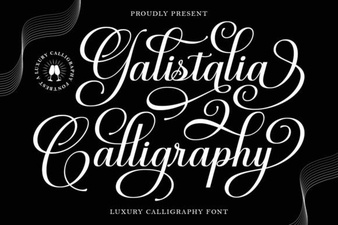 Galistalia Font: Creative Lettering & Design Projects
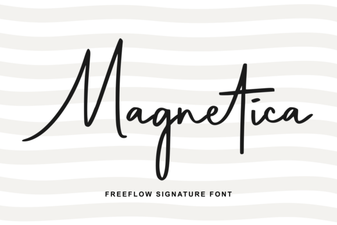 Enhance Projects with Magnetica Modern Font Design
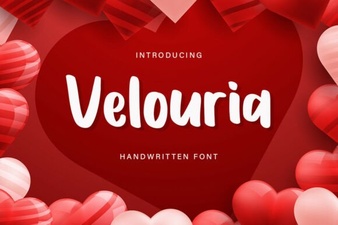 Velouria Font: Design Your Creative Projects
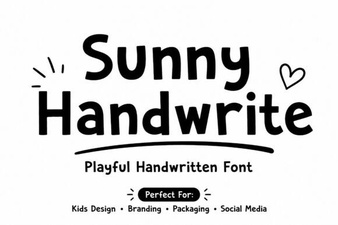 Sunny Handwriting Font: Creative Projects and Design Tips
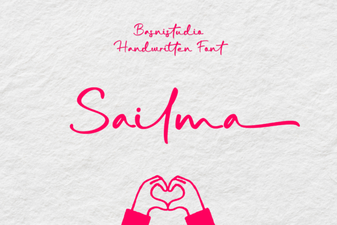 Sailma Font for Creative Design Projects
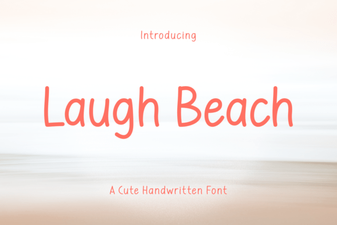 Laugh Beach: a Playful Font for Creative Projects